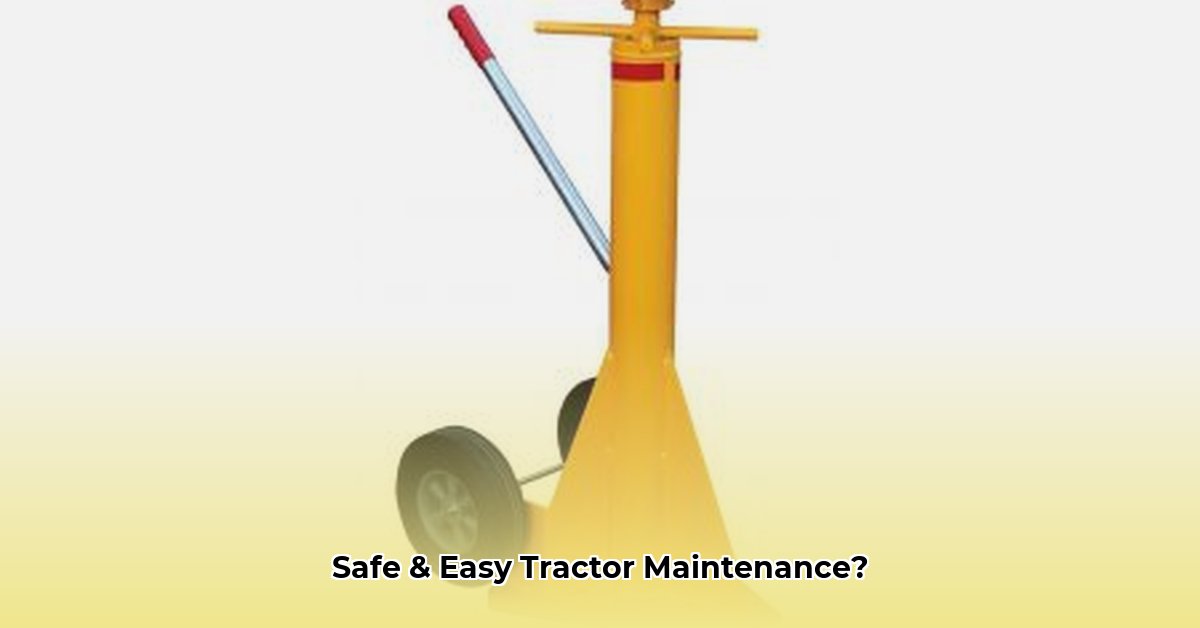
Working on your tractor shouldn't be a gamble. This guide provides a comprehensive overview of tractor jack stands, focusing on the vital role of front-splitting stands for efficient and safe engine maintenance. We'll cover selection, safe usage, maintenance and the current market trends to help you make informed decisions.
Understanding Tractor Jack Stands: A Foundation for Safe Tractor Maintenance
Tractor jack stands are specialized tools that securely support your tractor during repairs and maintenance, significantly reducing the risk of accidents. They're essential for anyone who regularly works on their tractor. General-purpose stands offer broad utility, but front-splitting stands provide superior access to the engine and transmission, simplifying many repair jobs. The growing demand for specialized stands reflects a shift towards safer and more efficient tractor maintenance practices. This increased demand highlights the increasing importance farmers place on safety and the efficiency of their maintenance procedures.
Choosing the Right Jack Stand: Prioritizing Safety and Functionality
Selecting the appropriate jack stand is critical. Improper choices can lead to accidents so careful consideration is crucial. Consider these factors to ensure you select the best jack stand for your tractor:
- Weight Capacity: Always choose stands with a weight capacity significantly exceeding your tractor's weight. A safety margin is essential. Think of it like this: would you build a house on a foundation that only just met the minimum requirements? The answer is no, you would want something far more substantial.
- Compatibility: Ensure compatibility with your specific tractor model. Incorrectly sized stands may not provide adequate support, increasing the risk of accidents. Check the manufacturer's specifications meticulously, and consider the specific access needs of your tractor's design.
- Material and Construction: Look for stands made from high-quality steel with robust construction. The strength of the steel directly impacts the stand's ability to support the tractor's weight safely. Avoid cheap alternatives that could compromise safety. Opt for options that are resistant to corrosion, and consider the impact the environmental conditions on your farm will have on the integrity of your chosen jack stand over time.
- Safety Features: Essential features include sturdy locking mechanisms, wide base plates for stability, and, where appropriate, securely locking casters. These features minimize the risk of accidental collapse.
Risk Assessment Matrix:
| Feature | Potential Problem | Severity | Mitigation |
|---|---|---|---|
| Steel Construction | Cracks, bends, or weakening | High | Regular visual inspections; prompt replacement. |
| Caster Wheels (if present) | Wheel or locking mechanism failure | Medium | Regular lubrication and inspection. |
| Bolt Connections | Loose, sheared, or failed bolts | High | Frequent tightening checks; use high-quality bolts. |
| Tractor Compatibility | Incorrect placement, inadequate support | High | Verify compatibility; consult your tractor's manual. |
Safe Use of Tractor Jack Stands: A Step-by-Step Guide
Correct usage is as crucial as selecting the right stands. Following these steps will ensure safe tractor maintenance:
- Preparation: Place wheel chocks to prevent accidental movement. Ensure a level and stable work surface. Consult your tractor's manual for proper lifting points. This methodical approach minimizes risk and ensures a smooth process.
- Positioning: Position jack stands under the designated lifting points (check your tractor's manual). Ensure firm and stable contact with the tractor’s frame. Double-check everything before proceeding.
- Lifting: Use a properly sized jack to slowly and steadily lift the tractor. This step is crucial as any sudden movement can cause an accident. Never work under a tractor supported only by a jack; always use jack stands.
- Securing: Once lifted, ensure the jack stands are securely locked. Check for wobble or instability. This moment of vigilance is vital to establishing a stable and safe working environment.
- Lowering: After completing the work, slowly and cautiously lower the tractor, again avoiding sudden drops.
Maintaining Your Jack Stands: Ensuring Long-Term Reliability
Regular maintenance extends the life of your stands and enhances safety. Perform the following tasks:
- Regular Inspections: Visually inspect all components for damage, loose bolts, or wear and tear at least annually (or more frequently in heavy-use environments).
- Lubrication: Lubricate moving parts as needed to prevent rust and ensure smooth operation. A well-maintained jack stand is a safe jack stand.
- Storage: Store stands in a clean, dry place to prevent corrosion, preserving their integrity for many years to come.
Remember, if you notice any damage, don't attempt repairs unless you're experienced. Contact the manufacturer or a qualified mechanic if necessary.
Market Overview and Future Trends in Tractor Jack Stands
The market for tractor jack stands, especially specialized designs like front-splitting stands, is experiencing significant growth. Farmers are increasingly prioritizing safety and efficiency during maintenance. This trend reflects a growing awareness of the importance of safe working practices. Future innovations will likely involve advancements in materials and design to provide enhanced safety and ease of use. However, the lack of standardization presents challenges. Therefore, meticulous checking of compatibility remains crucial before purchasing any jack stand.